
Streamline Your Business with QuickBooks Bookkeeping Services

Streamline Your Business with QuickBooks Bookkeeping Services

Let’s be honest, keeping your business books in order is not always the most exciting part of running a company. But if you don’t stay on top of it, it can quickly snowball into a disaster. The thought of balancing receipts, invoices, and bank feeds is enough to make anyone break into a cold sweat. But here’s the truth: if you make bookkeeping part of your weekly rhythm, it won’t feel so overwhelming. In fact, it’ll give you the clarity and control you need to make better decisions for your business. 

In this post, we’ll walk through how to streamline your bookkeeping routine with QuickBooks bookkeeping services and build a weekly rhythm that suits your busy schedule. With the right systems in place, you’ll spend less time worrying about numbers and more time focusing on growing your business. Let’s dive in. 

Why Weekly Beats Monthly: Compounding Errors 

Picture this: you’re checking your bank statements once a month, trying to remember what all those transactions were. You’ve got receipts scattered everywhere, and your records are a mix of paper and digital chaos. When you finally sit down to do your bookkeeping, you’re not just reconciling numbers, you’re also trying to piece together a month’s worth of financial activity. That’s a huge risk, especially when you factor in things like GST/BAS reporting.

Here’s why a weekly routine is a game-changer. The longer you leave things, the harder it gets to find and correct mistakes. By working in shorter, more frequent intervals, you catch discrepancies while they’re still small and easy to fix. You won’t have to spend hours combing through records or trying to figure out what went wrong. Working with MYOB Bookkeepers can help streamline the process, making your bookkeeping much more efficient and stress-free.
What Does “Clean Books” Actually Mean? 
What Does “Clean Books” Actually Mean?

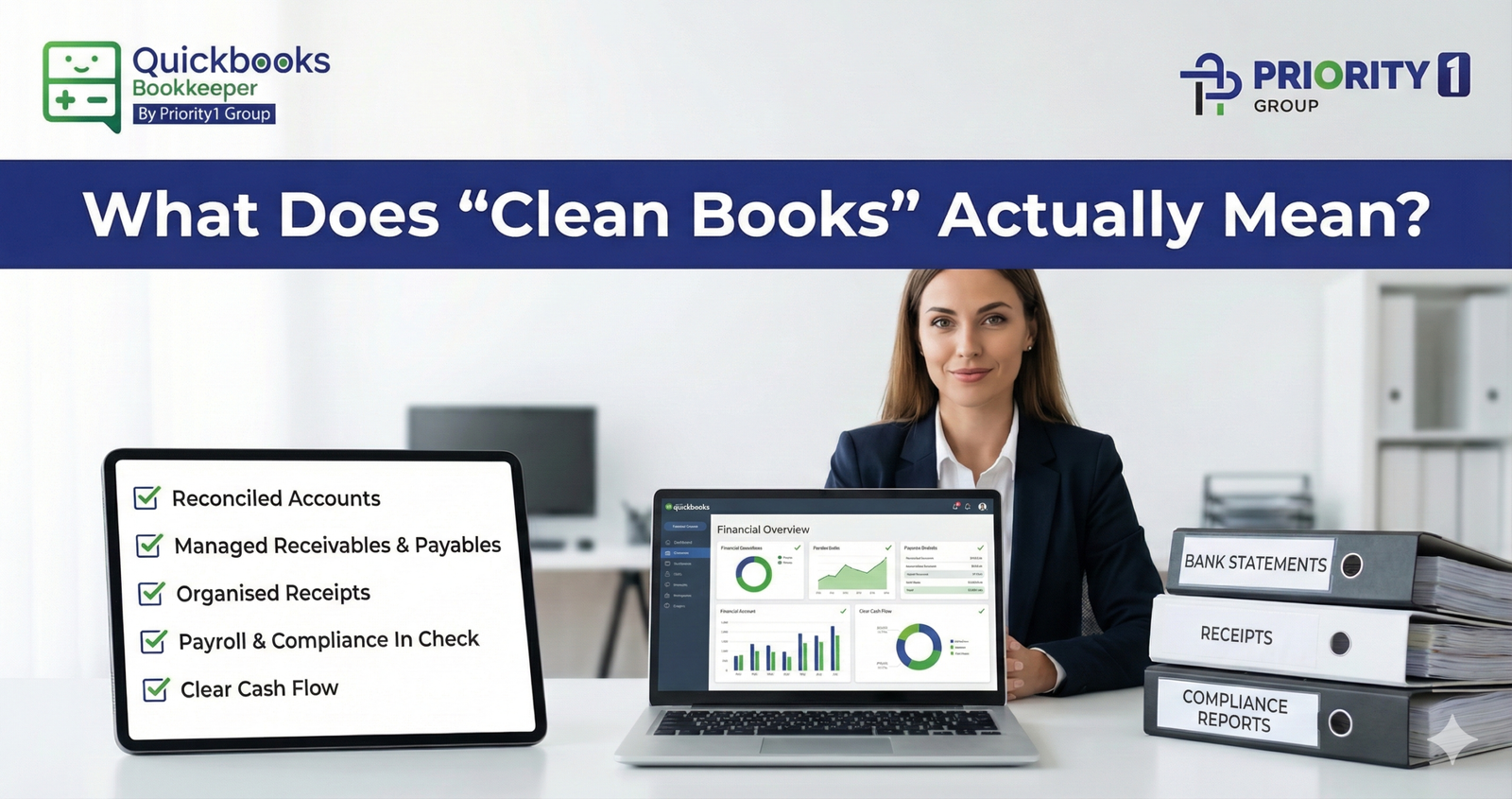
In simple terms, clean books are accurate, up-to-date financial records that match your actual business activity. It means: 

    • Your bank statements and QuickBooks accounts are reconciled. 
    • Receivables and payables are tracked and managed. 
    • You’ve organised your receipts and documentation. 
    • Payroll, super, and GST/BAS compliance are all in check. 
    • Cash flow is clear, giving you a real-time view of your business health. 

The goal is to have everything in order so that when it’s time to make decisions or file your tax return, you’re ready. It’s about reducing the stress and confusion that comes with poorly managed finances. 

The Weekly Stack: Tools + Rules 

Before we jump into the weekday routine, let’s talk about the tools and rules you’ll need for a smooth process: 

Tools You’ll Need: 

    • QuickBooks: The central hub for your bookkeeping, where you’ll manage invoicing, payables, receipts, and bank feeds. 
    • Bank feeds: Automate the connection between your bank account and QuickBooks to track every transaction. 
    • Receipt scanner apps: Use tools like Expensify or Receipt Bank to digitise and organise your receipts. 

Rules to Follow: 

    • Consistency: Do your bookkeeping at the same time each week, no matter how busy things get. 
    • Organisation: Keep all receipts, invoices, and documents in one digital place for easy reference. 
    • Reconciliation: Don’t skip this step. Regular reconciliation ensures your numbers are accurate. 

Your Weekday Routine: Monday to Friday 

Monday: Plan and Prioritise 

    • Start your week by setting aside 30 minutes to review last week’s financials. 
    • Check your bank feed and ensure all transactions have been categorised correctly in QuickBooks. 
    • Look for any anomalies or discrepancies and note them down for follow-up. 

Tuesday: Manage Receivables and Payables 

    • Follow up on outstanding invoices and review what’s due to be paid. 
    • Make sure you’ve entered all bills and invoices into QuickBooks and are tracking them correctly. 
    • If you’re expecting payments, keep an eye on your receivables and ensure they’re up to date. 

Wednesday: Payroll and Super 

    • If you have employees, run your payroll process through QuickBooks, ensuring all wages, super, and taxes are accounted for. 
    • Double-check that your superannuation is calculated correctly and ready for payment. 
    • Make sure any payroll-related documents are filed and stored for easy access. 

Thursday: GST/BAS Prep 

    • While you don’t need to file your BAS weekly, use Thursday to ensure your GST-related transactions are up to date. 
    • Review all your GST-coded transactions in QuickBooks and make sure they’re categorised properly. 
    • This will save you a lot of time come BAS time and ensure you’re not scrambling to fix issues last minute. 

Friday: Reconciliation and Check-In 

    • Take the final step of your weekly routine by reconciling your accounts in QuickBooks. 
    • Go over any discrepancies from earlier in the week and fix them. 
    • Review your cash flow and ensure everything’s balanced before the weekend. 

Red Flag Dashboard: Watch for These Signals 

Even with a solid routine, it’s important to keep an eye on key indicators. Here are some red flags that suggest something might be off with your books: 

    • Unreconciled bank accounts: If your bank feed doesn’t match your QuickBooks records, it’s time to investigate. 
    • Untracked expenses: If you’ve missed some receipts or bills, you could be overestimating your cash flow. 
    • Missing or incomplete records: Always ensure you’ve got the proper documentation for each transaction, especially if you’re preparing for tax season. 
    • Inaccurate GST or BAS numbers: If your GST is out of whack, your BAS reporting will be a nightmare later on. 

When to Bring in Help: Time-Tested Advice 

If your bookkeeping routine is starting to feel like a full-time job, it might be time to bring in a QuickBooks certified bookkeeper. An outsourced bookkeeping service can take the pressure off, allowing you to focus on other aspects of your business. If you find yourself regularly falling behind or not getting the level of detail you need, professional support can help you stay on track. 

A good bookkeeper doesn’t just clean up your records; they also provide advice on cash flow, payables, receivables, and even strategic tax planning. 

If you’re looking for reliable QuickBooks Bookkeeping, Priority1 Group offers comprehensive support for small businesses, including outsourced bookkeeping and systems management. 

Weekly Checklist: Keep It Simple 

Here’s your reusable weekly checklist: 

30-Minute Version: 

    • Review bank feed transactions. 
    • Check receivables and payables. 
    • Run payroll and super. 
    • Reconcile one account (if time permits). 

90-Minute Version: 

    • Follow the 30-minute version. 
    • Review GST/BAS prep for accuracy. 
    • Check cash flow and adjust forecasts. 
    • Address any discrepancies from the week. 

Conclusion: Get Your Business Running Smoothly with QuickBooks Bookkeeping Services 

Taking charge of your business’s finances doesn’t have to be overwhelming. By establishing a simple weekly rhythm, using the right tools, and staying consistent, you’ll keep your books in great shape and your mind at ease. 

If you want a more streamlined, hands-off approach to bookkeeping, Priority1 Group offers a range of services tailored to your business needs. From outsourced bookkeeping support to smart systems that save you time, we’ve got your back. Let us help you build a routine that works for your business, so you can focus on what matters most. 

Ready to get started? Visit us at Priority1 Group and take your bookkeeping to the next level today! 

Darshan M