

Here’s the blunt truth: DIY bookkeeping usually feels cheap right up until it isn’t.
It starts innocently enough. You tell yourself you’ll “catch up on Friday,” then Friday turns into month-end, month-end turns into panic, and suddenly you’re digging through emails for receipts while wondering why the bank balance doesn’t match. It’s a bit like skipping brushing your teeth for a few days. Nothing looks disastrous at first, but leave it long enough and the damage gets expensive.
The good news? You do not need to become a finance nerd to stay in control. You just need a weekly rhythm, a few smart rules, and the right support when things get messy.
Most business owners only count the obvious cost: software subscriptions. But the hidden costs of messy books are usually much bigger.
They show up as:
That is why QuickBooks bookkeeping is not just admin. It is decision-making fuel. When your numbers are current, you stop guessing and start leading.
Monthly bookkeeping sounds efficient. In reality, it often creates backlog, memory gaps, and small errors that snowball.
A transaction from three days ago is easy to remember. A transaction from three weeks ago? Not so much.
Weekly work wins because:
Think of it like tidying the kitchen after dinner instead of waiting until the weekend. The work is lighter, faster, and far less annoying.
Clean books do not mean perfect books. They mean clear, current, and usable books.
In plain English, clean books mean:
That clarity is what a good QuickBooks Bookkeeper helps create. Not fancy jargon. Just numbers you can trust.
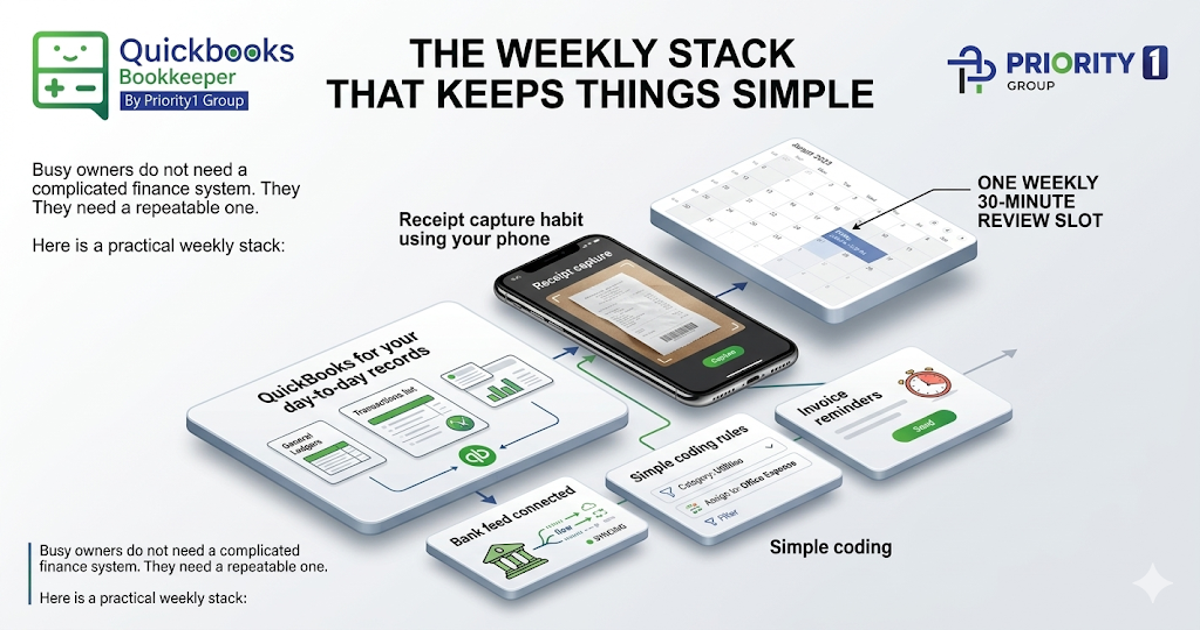
Busy owners do not need a complicated finance system. They need a repeatable one.
Here is a practical weekly stack:
This is where QuickBooks bookkeeping services can save serious time. You are not buying more admin. You are buying consistency.
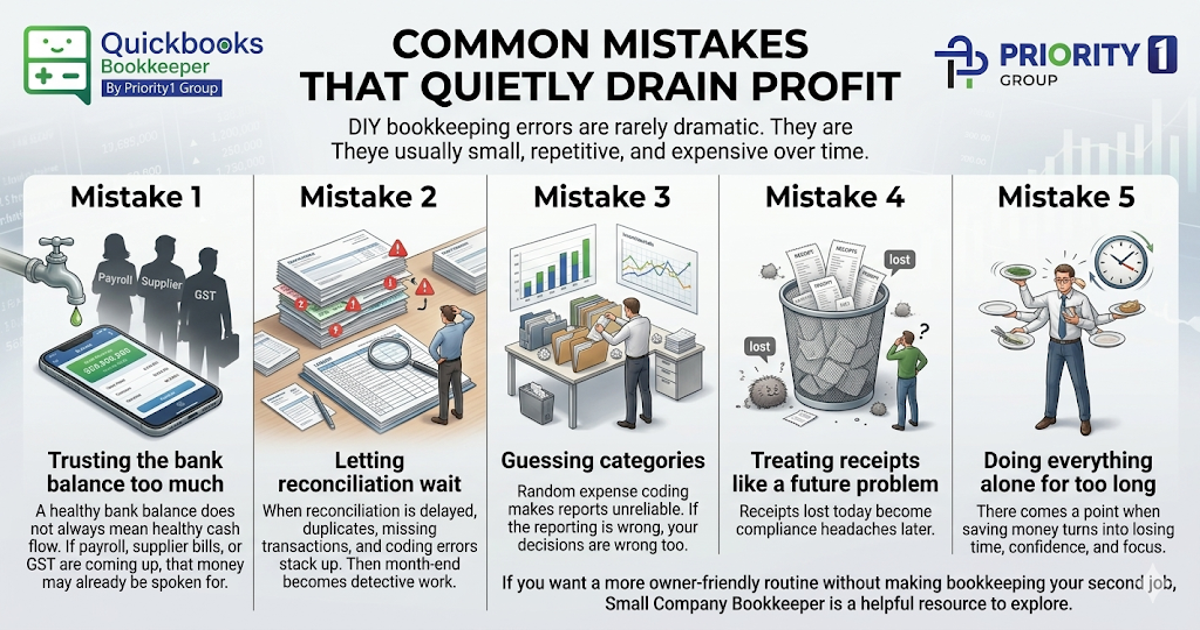
DIY bookkeeping errors are rarely dramatic. They are usually small, repetitive, and expensive over time.
A healthy bank balance does not always mean healthy cash flow. If payroll, supplier bills, or GST are coming up, that money may already be spoken for.
When reconciliation is delayed, duplicates, missing transactions, and coding errors stack up. Then month-end becomes detective work.
Random expense coding makes reports unreliable. If the reporting is wrong, your decisions are wrong too.
Receipts lost today become compliance headaches later.
There comes a point when saving money turns into losing time, confidence, and focus.
If you want a more owner-friendly routine without making bookkeeping your second job, Small Company Bookkeeper is a helpful resource to explore.
You do not need dozens of reports. You need a few signals that tell you whether things are on track.
Check these weekly:
This quick scan takes pressure off month-end because problems are spotted early, not discovered late.
You do not need to lodge BAS weekly. But you do need habits that make BAS far easier when the time comes.
Good weekly habits include:
This is the difference between BAS preparation being a routine review and a last-minute scramble.
For businesses with stricter compliance demands, such as disability support providers, NDIS Bookkeeper can be a useful point of reference for building cleaner systems.
Let’s keep this practical. The best receipt system is the one you will actually use.
Try this:
Take the photo immediately after the purchase
Upload or email it into your bookkeeping workflow that same day
Match it to the transaction during your weekly review
Do not keep “mystery expenses” sitting uncategorised
A simple rule helps: no receipt, no mental closure. Deal with it now so you do not pay for it later in time or stress.
If you need support setting up an efficient system, MYOB Bookkeepers can help streamline the process, ensuring everything is organised and accurate from the start.
There is a simple test here: if bookkeeping regularly steals time from sales, service delivery, or sleep, it is no longer “saving money.”
Good help should:
That is where an Outsourced Bookkeeping Service often makes sense. The goal is not to hand over control. It is to get better control with less friction.
And if you are specifically looking for a QuickBooks certified bookkeeper, the best fit will be someone who can combine software know-how with practical business habits, not just technical processing. For more focused support around setup and consistency, Quickbooks Bookkeepers is worth knowing about.
DIY bookkeeping is not expensive because of the software. It becomes expensive when inconsistency creates mistakes, delays, and poor decisions. A weekly rhythm keeps your books cleaner, your stress lower, and your business more predictable.
If you want support that feels practical, human, and built for busy owners, Priority1 Group can help you create better systems, stronger routines, and ongoing bookkeeping confidence. Visit Priority1 Group to take the next step.