
Let’s be honest – running a small business is a constant balancing act. You’ve got a million things on your plate, and when it comes to managing your finances, it’s easy to let things slide. But here’s the kicker: bookkeeping isn’t something you can just put off until next month. The longer you wait to get your books in order, the harder it becomes to catch up, and the bigger the mess to clean up.
If you’ve been relying on spreadsheets or trying to handle QuickBooks bookkeeping on your own, you know exactly what I mean. Maybe you’ve tried to do it all yourself, or perhaps you’ve hired someone who’s just not cutting it. Either way, you’re here for a reason: to make your life easier. And that’s exactly where hiring a QuickBooks bookkeeper comes in.
Here’s why you should make the leap.
Ever heard the saying, “A stitch in time saves nine”? Well, in bookkeeping, it’s more like “A small mistake today could snowball into a massive problem tomorrow.” By tackling your finances weekly, you’re preventing those little errors from building up over time.
Think of it like brushing your teeth. If you only brush once a month, you’re asking for a lot of trouble. But if you do it every day, it’s much easier to spot and fix any problems before they get out of hand. Weekly bookkeeping habits allow you to stay on top of your finances in real-time, so you’re never blindsided by missed payments, misallocated receipts, or a mountain of GST/BAS paperwork.
In simple terms, clean books mean your financial records are accurate, up-to-date, and ready for tax season. But clean books aren’t just about tidying up for the tax man, they’re also the key to keeping your business running smoothly. When your QuickBooks bookkeeping is organised, you have a clear view of:
A QuickBooks certified bookkeeper has the tools and knowledge to keep your books clean, so you can make smarter, data-driven decisions without the headache.
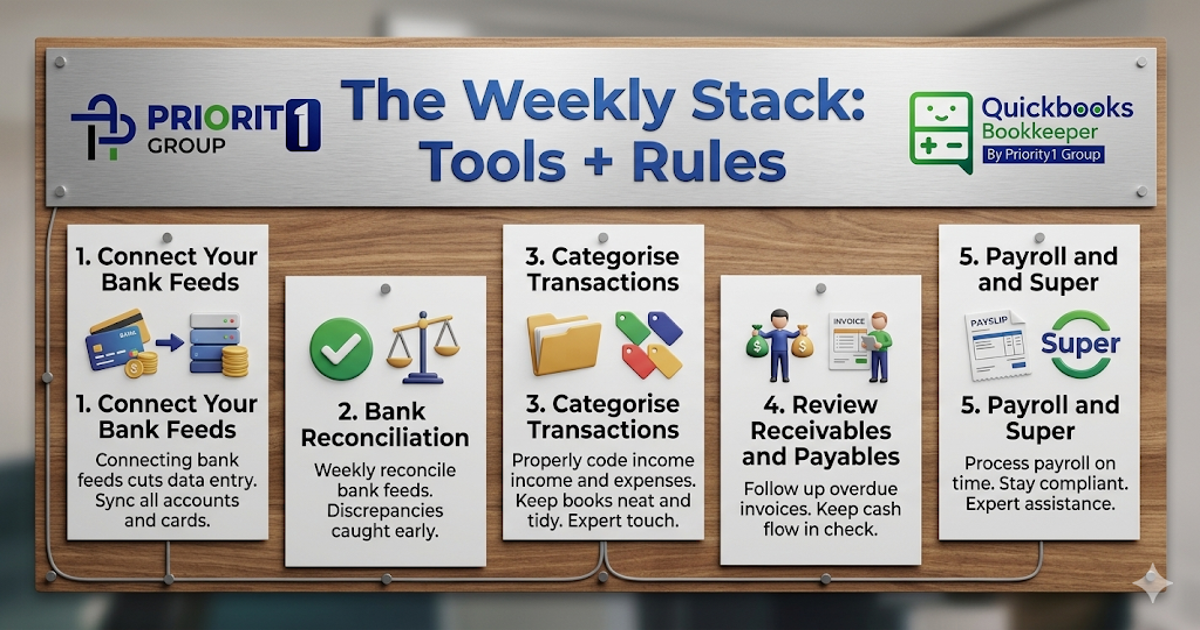
Consistency is key when it comes to bookkeeping. Here’s a weekly stack of tools and habits that will set you up for success:
Connecting your bank feeds to QuickBooks allows your transactions to flow directly into the system, cutting down on manual data entry and errors. Make sure your bank accounts and credit cards are synced, so you always have the latest information.
Every week, reconcile your bank feeds with QuickBooks. This simple process ensures that your records match what’s in your bank account. It’s like checking your work, small discrepancies can be caught early before they turn into bigger problems.
Go through your transactions and categorise them correctly. Ensure that all income and expenses are properly coded to the right accounts (this is where a QuickBooks bookkeeper’s expertise really shines). It might seem tedious, but it’s worth it to keep your books neat and tidy.
Check who owes you money and who you owe. Following up on overdue invoices will keep your cash flow in check, while making sure you’re not missing any bills that need to be paid.
If you have employees, make sure payroll is processed on time, and super contributions are recorded properly. A QuickBooks bookkeeper will help you stay compliant with the latest tax laws.
Every small business owner needs a quick way to assess the health of their books. Here are some red flags to look out for:
If you spot any of these red flags, it’s a sign that your system needs a little more attention. A QuickBooks Bookkeeper can help resolve these issues quickly before they spiral.
You don’t need to file your BAS (Business Activity Statement) every week, but you do need to be ready when it’s time. Here are a few weekly habits to keep things running smoothly:
With these weekly habits, preparing for your BAS will be a breeze.
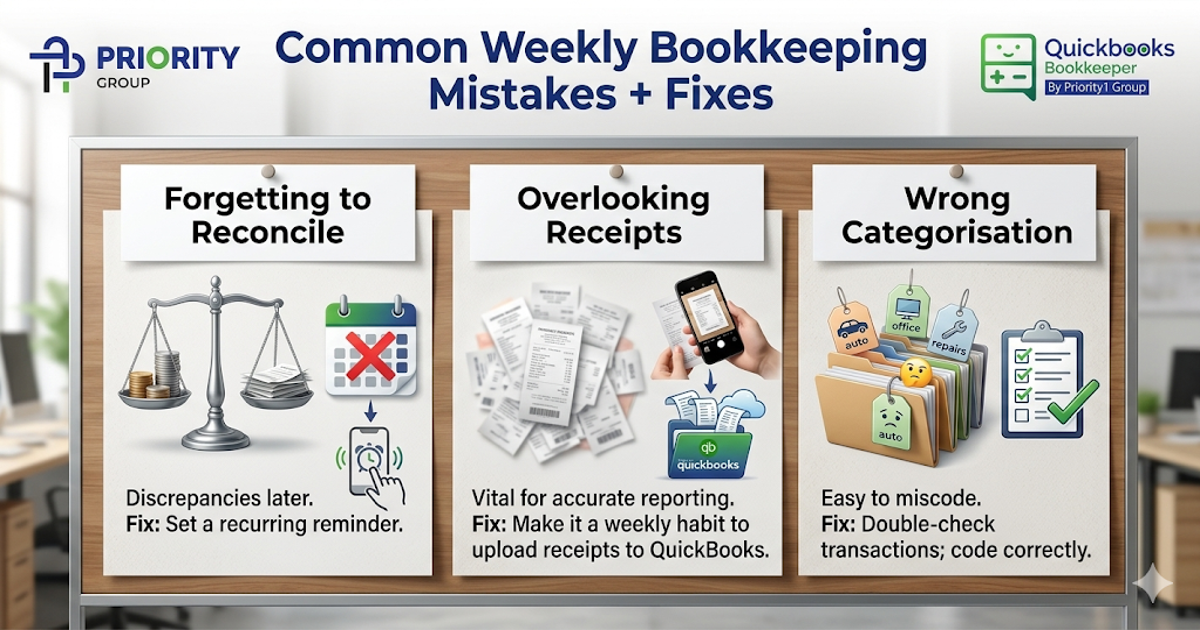
Even the best of us make mistakes, here are some common ones to watch for:
The good news? These mistakes are easy to fix when you’re on top of your weekly bookkeeping.
So, when do you need to bring in help? Here’s the test: If you’re finding it difficult to keep up with your weekly routine, or if your books are always out of sync, it’s time to bring in a professional. A QuickBooks bookkeeper can:
If you want to focus on growing your business without worrying about the numbers, bringing in a QuickBooks certified bookkeeper is a smart move.
At the end of the day, your business is your passion, but your time is limited. If you’re tired of juggling QuickBooks bookkeeping on your own or dealing with inconsistent financials, it’s time to outsource the stress. Priority1 Group offers tailored solutions to simplify your bookkeeping, so you can get back to doing what you do best.
Whether you need a QuickBooks bookkeeper or ongoing support, we’re here to help you streamline your business finances. Visit Priority1 Group today to learn more and take control of your financial future with confidence.