
Here’s the blunt truth: most bookkeeping problems don’t start because business owners are lazy. They start because you’re flat out running the business, serving customers, chasing work, paying staff, and putting out spot fires. The books become “something I’ll deal with later”, until later turns into a mess.
It’s a bit like brushing your teeth. Miss one night, no drama. Skip it for six weeks, and suddenly you’ve got a bigger problem on your hands.
That’s exactly how QuickBooks bookkeeping works. Small weekly actions keep things clean, calm, and under control. Leave it too long, and little errors snowball into wrong numbers, missed receipts, BAS stress, and cash flow surprises.
The good news? You do not need to become a finance nerd to stay on top of it. You just need a simple weekly rhythm.
Monthly bookkeeping sounds efficient, but for most founders, it creates backlog. And backlog creates blind spots.
When you wait until month-end, you’re usually trying to remember what happened weeks ago. A transaction looks unfamiliar. A receipt is missing. A supplier bill sits uncoded. A payroll item gets posted to the wrong account. One small mistake isn’t fatal, but when those mistakes stack up, your reports stop being useful.
A weekly rhythm fixes that because:
That’s the real point of good books: confidence. You want to know where the business stands without crossing your fingers.
Clean books don’t mean perfect books. They mean your numbers are organised enough to trust.
In plain English, clean books look like this:
That’s it. Clean books are clear books.
If you’re building better habits from scratch, a resource like Small Company Bookkeeper can help make finance routines feel less overwhelming and more owner-friendly.
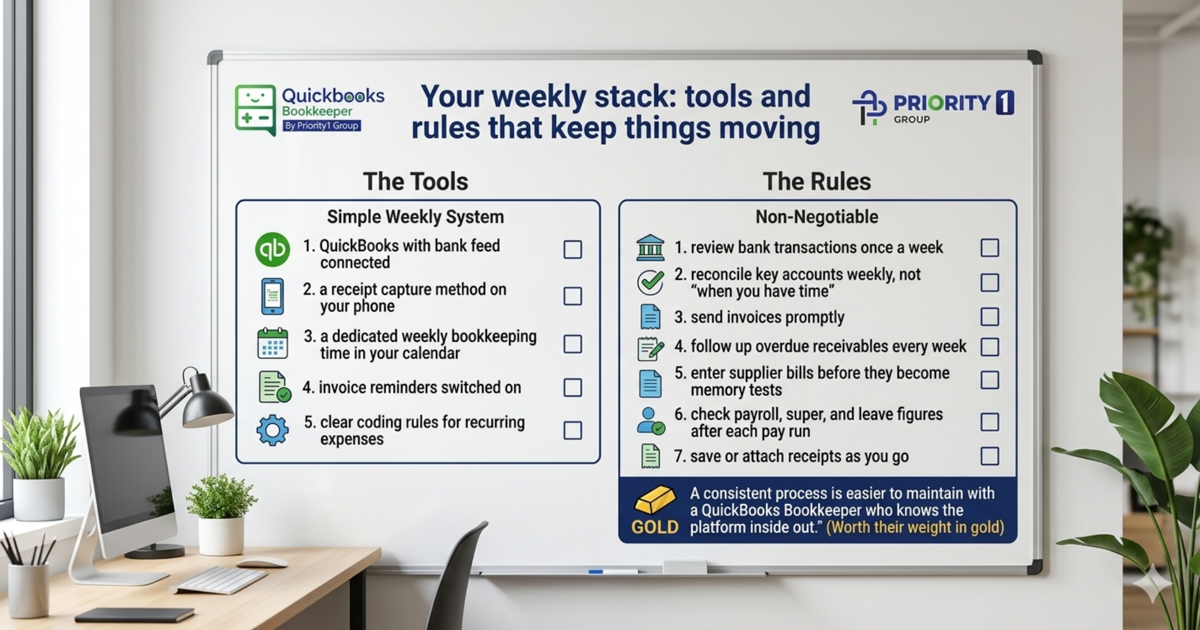
You do not need a giant process. You need a small stack that you’ll actually stick to.
Keep your weekly system simple:
Make these non-negotiable:
This is where a QuickBooks Bookkeeper can be worth their weight in gold. Not because you can’t do it, but because a consistent process is easier to maintain when someone knows the platform inside out.
You don’t need a mountain of reports. You need a few signals that tell you whether the business is healthy or drifting.
Check these every week:
If a number makes you squint, don’t ignore it. That tiny “that looks odd” feeling is often the first warning sign.
A lot of founders think they need full monthly reporting before they can take action. Usually, they just need visibility. Solid QuickBooks bookkeeping services often focus on exactly that: making sure the numbers are usable before they become urgent.
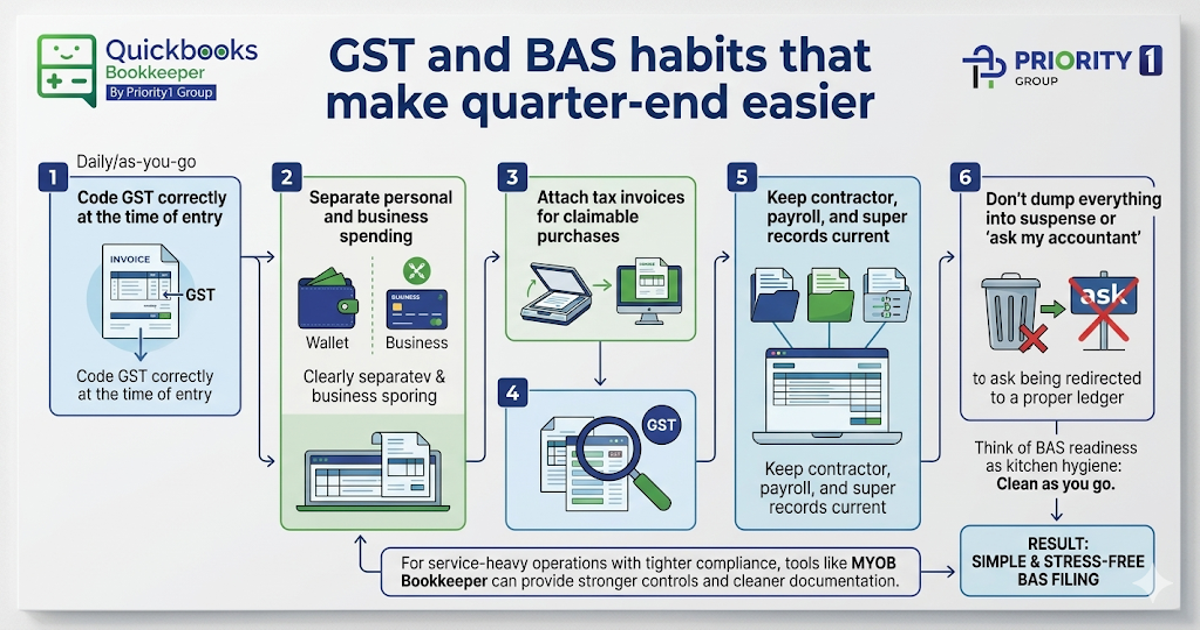
You do not need to prepare BAS every week. But you do need habits that make BAS simple when it arrives.
Here’s the practical version:
Think of BAS readiness as kitchen hygiene. You’re not cooking the whole meal every day, but you are cleaning as you go so nothing turns into a disaster later.
For businesses with tighter compliance requirements, especially service-heavy operations, systems matter even more. That’s where something like Myob Bookkeeper can be useful for owners who need stronger controls and cleaner documentation.
Receipts are one of those tiny tasks that cause wildly annoying problems when ignored.
The fix is not glamorous:
Do not rely on your memory. “I’ll sort it out later” is how deductions get missed and GST claims get messy.
Boring systems beat heroic catch-up sessions every single time.
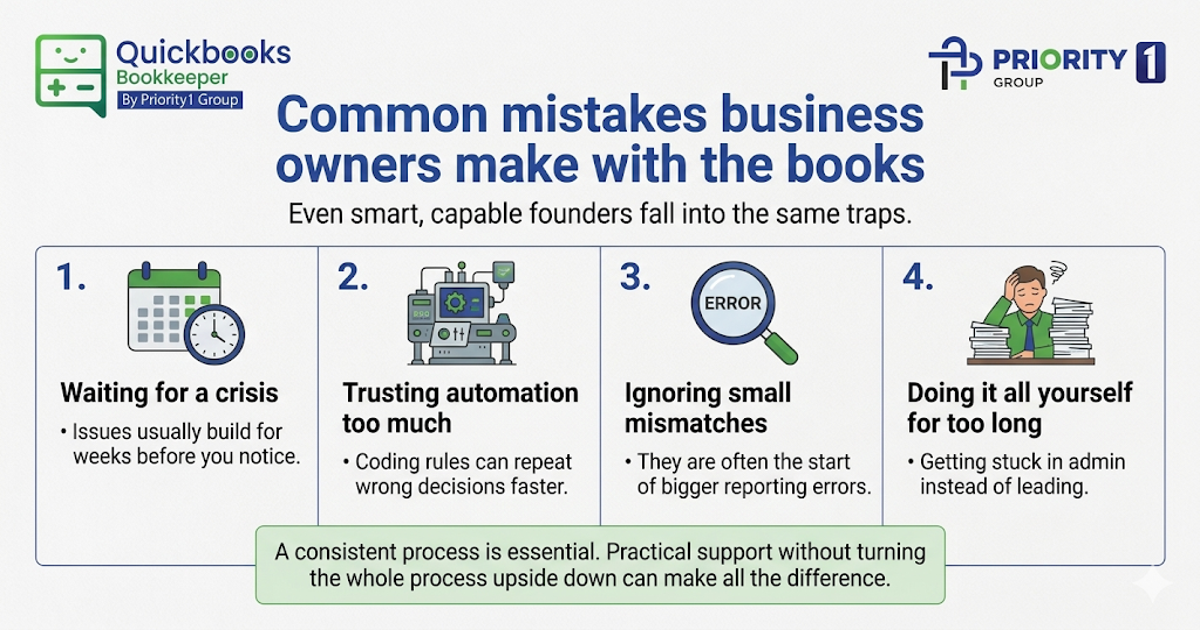
Even smart, capable founders fall into the same traps.
A lot of people only look at the numbers when cash feels tight. By then, the issue has usually been building for weeks.
The bank feed is helpful, but it is not magic. Coding rules can save time, but wrong rules repeat wrong decisions faster.
A few unreconciled items might seem harmless. They’re often the start of bigger reporting errors.
There’s a difference between being hands-on and being stuck in admin.
If your books are taking too much headspace, QuickBooks Bookkeepers is one example of where owners look when they want practical support without turning the whole process upside down.
Here’s a simple test: if bookkeeping keeps getting pushed, creates stress, or stops you focusing on work that actually grows the business, it’s time to get support.
Good help should give you:
That might mean a QuickBooks certified bookkeeper, a broader Outsourced Bookkeeping Service, or someone who can tighten systems while you stay focused on running the business.
The best support doesn’t make you feel silly. It makes the business feel lighter.
You do not need complicated finance systems to feel in control. You need clean habits, a weekly rhythm, and numbers you can trust. Do the small things weekly, and the big things get easier: reconciliation, receipts, payables, receivables, payroll, and reporting all become far less painful.
If you want steady support with better systems and ongoing guidance, Priority1 Group is a smart place to start. They help business owners build simple, reliable financial routines that actually stick. Learn more at Priority1 Group.