
Let’s be honest – most messy books don’t happen because someone “didn’t care.” They happen because the business got busy. You had customers to serve, staff to manage, and a thousand little decisions to make. Bookkeeping slid down the list… until it became an end-of-month monster.
The good news? You don’t need to be a finance nerd to keep your numbers clean. You just need a weekly rhythm that stops tiny mistakes from snowballing into big problems.
Think of bookkeeping like brushing your teeth. Skip it once? Probably fine. Skip it for weeks? You’ll pay for it later. Weekly routines keep your file healthy, your reports believable, and your cash flow less surprising.
A single mis-coded transaction here, a duplicate invoice there, a missing receipt… none of it feels urgent in the moment. But those small issues stack up. Then suddenly:
Weekly routines stop the pile-up. They turn bookkeeping from a rescue mission into a simple maintenance habit.
Here’s the easiest way to define accurate books:
If you can trust the reports, you can trust your decisions. And that’s the whole point.
Pick one place where transactions are “official.” For most small businesses, that’s QuickBooks plus your bank feed. Everything else (spreadsheets, receipts in emails, random notes) should feed into that system – not compete with it.
Bank feeds, receipts, and approvals:
A strong weekly workflow usually includes:
This is also where many owners decide whether they want to keep it internal or move to an Outsourced Bookkeeping Service that keeps transactions consistent, reconciliations on track, and reporting reliable as volume grows.
Start the week with a 5-minute check:
If the feed is broken, everything else gets harder. Fixing it Monday prevents chaos later.
If you use Shopify, Stripe, Square, PayPal, or another platform, make sure payouts and fees are landing correctly. Sales platforms are like conveyor belts – when they jam, the mess lands in your books.
Rules are great – until they confidently code something wrong 47 times in a row.
On Tuesdays, batch-categorise transactions:
This is one reason many founders lean on a QuickBooks certified bookkeeper – someone who understands not just “where it goes,” but why it should go there for reporting accuracy.
Keep it simple with a few guardrails:
Your goal isn’t perfection. Your goal is “clean enough to trust.”
Instead of reconciling once a month (and suffering), reconcile weekly. It’s like doing laundry more often – smaller loads, less pain.
A weekly “mini reconcile” means:
When something doesn’t match, don’t guess. Do this:
If you’ve ever felt stuck at this point, you’re not alone. This is exactly where structured QuickBooks bookkeeping services can prevent accidental “fixes” that create bigger problems later.
Thursday is your receivables touchpoint:
A simple rule: don’t let invoices age in silence. Cash flow loves momentum.
If you’re building a broader, simpler finance routine beyond QuickBooks, you’ll also find practical tips and systems at Small Company Bookkeeper – great for owners who want clarity without drowning in accounting jargon.
Then flip to payables:
If you run lean, payables discipline is your safety net. This is also where outsourcing helps: an external team can keep approvals tight while you focus on operations.
Payroll errors don’t just affect staff morale – they distort your true costs.
Each Friday (or each pay cycle), do a quick check:
Make sure:
If you’re juggling awards, multiple locations, or compliance-heavy operations, this is where expert support matters. Many businesses choose a QuickBooks certified bookkeeper not because they can’t click buttons – but because they want fewer payroll “mysteries” later.
You don’t need 30 reports. You need five signals:
Profit is a story written by timing. You can show profit and still be cash-poor. Weekly dashboards keep you grounded in reality – especially in fast-moving weeks.
If your business needs industry-specific clarity (like NDIS providers dealing with high volume transactions and compliance expectations), NDIS Bookkeeper is a strong resource to explore for specialised systems and support.
Common GST issues include:
Once a week, run a quick GST sanity check:
This keeps BAS prep smoother, and reduces end-of-quarter stress.
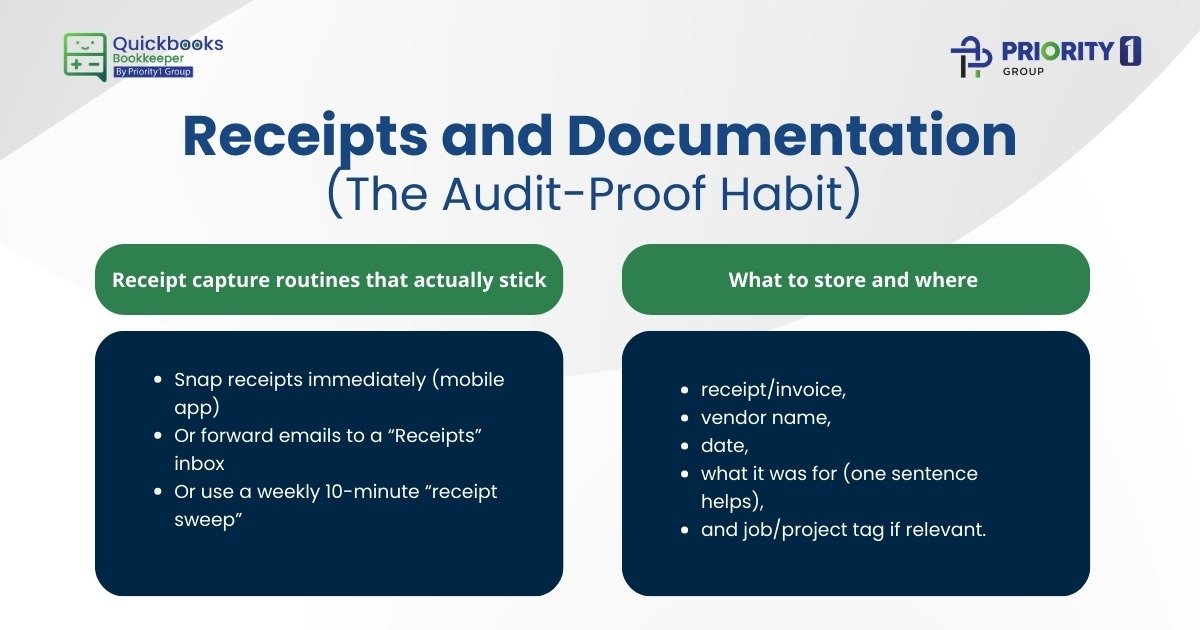
Here’s the trick: make it ridiculously easy.
At minimum, store:
Documentation is like a seatbelt. You don’t think about it until you really need it.
These buckets are like a junk drawer. Fine temporarily, dangerous long-term. If something isn’t clear, don’t leave it hanging for month-end-add a note, attach the receipt, and make a decision within the week. If your file keeps filling up with uncategorised items or you’re second-guessing what goes where, that’s usually a sign your system needs more structure. This is exactly where Priority1 Group can help-by setting up clean coding rules, consistent workflows, and review checkpoints so your books stay accurate week to week, not just “fixed” at BAS time.
Watch for duplicate bank feed imports, reversed transactions that still got coded, Stripe/PayPal deposits that don’t match invoices, and transfers recorded twice. Weekly reviews catch these quickly-before reconciliation becomes a nightmare. And if you’d rather not spend your Fridays chasing discrepancies, Priority1 Group can support you with ongoing checks and reconciliation routines that keep the file tidy, the reports reliable, and the clean-up work minimal.
Ask yourself:
If the answer is “yes” to any of those, professional support is worth considering.
Good support looks like:
This is where QuickBooks bookkeeping services can be a genuine growth tool – not just admin outsourcing. And if you want the confidence of a specialist, a QuickBooks certified bookkeeper helps ensure your file stays accurate as transaction volume climbs.
If you stick to this weekly, your month-end becomes a quick review – not an emergency.
Weekly bookkeeping isn’t about being “perfect.” It’s about staying accurate enough that your numbers actually help you make decisions. When you keep your QuickBooks file tidy in small weekly steps – feeds, categorisation, mini-reconciliation, receivables/payables touchpoints, and payroll checks – you protect your cash flow and reduce stress.
And if you’re ready to stop doing it all yourself, Priority1 Group can support small businesses with structured systems, consistent reporting, and reliable processes that scale. Whether you need ongoing QuickBooks bookkeeping services or support from a QuickBooks certified bookkeeper, the right setup turns bookkeeping from a chore into a business advantage.