
Let’s be honest: payroll is one of those jobs that feels small right up until it goes wrong.
One missed super payment, one casual employee paid the wrong rate, one week of “I’ll sort it later,” and suddenly you’re not running a business, you’re chasing a mess. Most owners don’t need more finance jargon. They need a routine that works when they’re flat out, half-distracted, and wearing ten hats.
That’s where QuickBooks earns its keep.
Used properly, it turns bookkeeping from a monthly panic into a steady weekly habit. Think of it like brushing your teeth. Doing a little bit often is boring, sure, but it stops expensive problems building up in the background. And when payroll is involved, boring is brilliant.
A lot of business owners try to “catch up” once a month. On paper, that sounds efficient. In real life, it usually means forgotten receipts, uncoded transactions, payroll questions, and that sinking feeling when the numbers don’t match the bank account.
Weekly beats monthly because small mistakes stay small.
When you review your bank feed every week, reconcile regularly, and keep an eye on payables and receivables, you spot issues while they’re still fixable. That matters for cash flow, payroll accuracy, and your stress levels.
A weekly rhythm helps you:
That’s why strong QuickBooks bookkeeping isn’t just admin. It’s operational control.
Clean books sounds like something an accountant says while charging you by the hour. In plain English, it means your financial records are up to date, organised, and trustworthy.
Clean books usually look like this:
That’s the point. Clean books let you trust the numbers.
If you want a more owner-friendly way to build those habits, Small Company Bookkeeper is a useful resource for simple finance routines that don’t feel overwhelming.
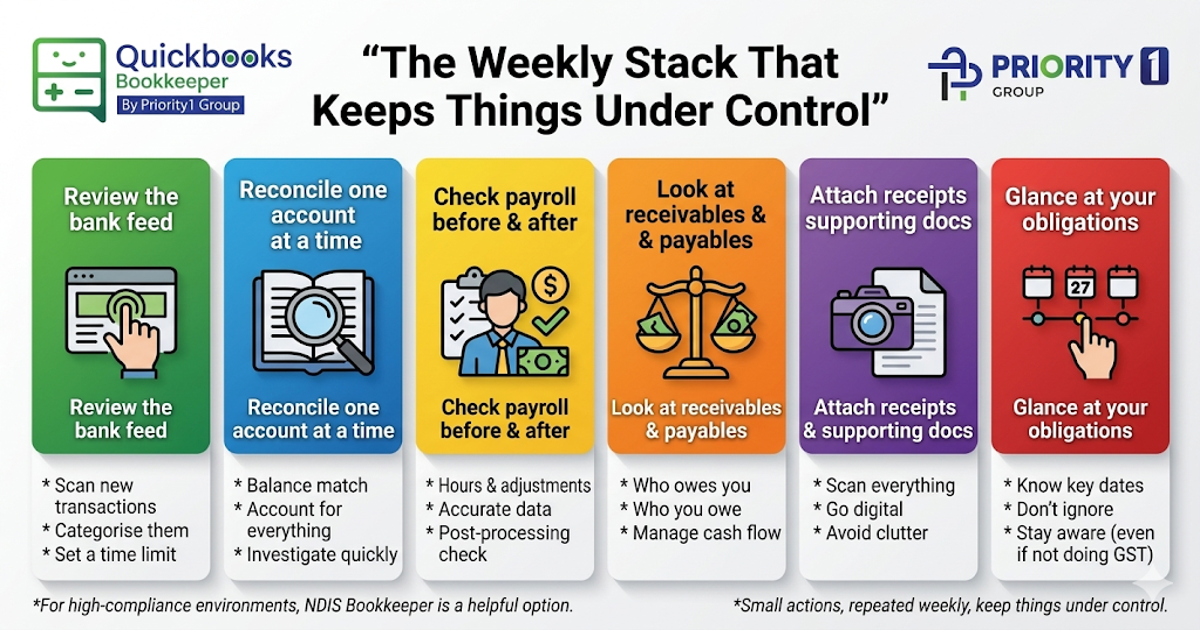
You do not need a five-hour finance block every Friday. You need a repeatable stack of small actions.
Scan new transactions and categorise them properly. This is where coding rules save time. The goal is not perfection on day one. The goal is consistency.
Don’t leave reconciliation until month-end. Match bank transactions, check for missing items, and investigate anything odd while it’s fresh.
Review hours, salary changes, leave, and any one-off adjustments. Then confirm the payroll run landed correctly in the system.
Who still owes you? What bills are due? Weekly visibility helps protect cash flow and stops awkward surprises.
A receipt with no system behind it is just paper clutter. Make sure documents are linked to the right transaction.
You don’t need to do GST/BAS weekly, but you do need to avoid pretending it doesn’t exist.
For businesses that want industry-specific structure, especially in high-compliance environments, Bookkeepers can be a helpful option when the normal “set and forget” approach just won’t cut it.
You don’t need twenty dashboards. You need a short list that tells you when something feels off.
Watch for:
If any of those pop up, deal with them that week. Delayed bookkeeping has a nasty habit of turning minor admin into expensive confusion.
You do not need to prepare your BAS every week. You do need habits that make BAS time feel normal instead of chaotic.
That means:
The businesses that breeze through BAS season usually aren’t smarter. They’re just less behind.
This is where many owners benefit from QuickBooks bookkeeping services, because the real value is not just data entry. It’s creating a rhythm where the numbers are usable before deadlines start breathing down your neck.
Receipts go missing because there’s no routine, not because you’re lazy.
The fix is simple:
Think of receipts like proof, not paperwork. They back up your tax claims, explain your spending, and protect you when someone asks questions months later.
A good QuickBooks Bookkeepers nor MYOB Bookkeepers will usually help set up a receipt workflow that fits the way you already work, instead of forcing you into some clunky process you’ll abandon in a week.
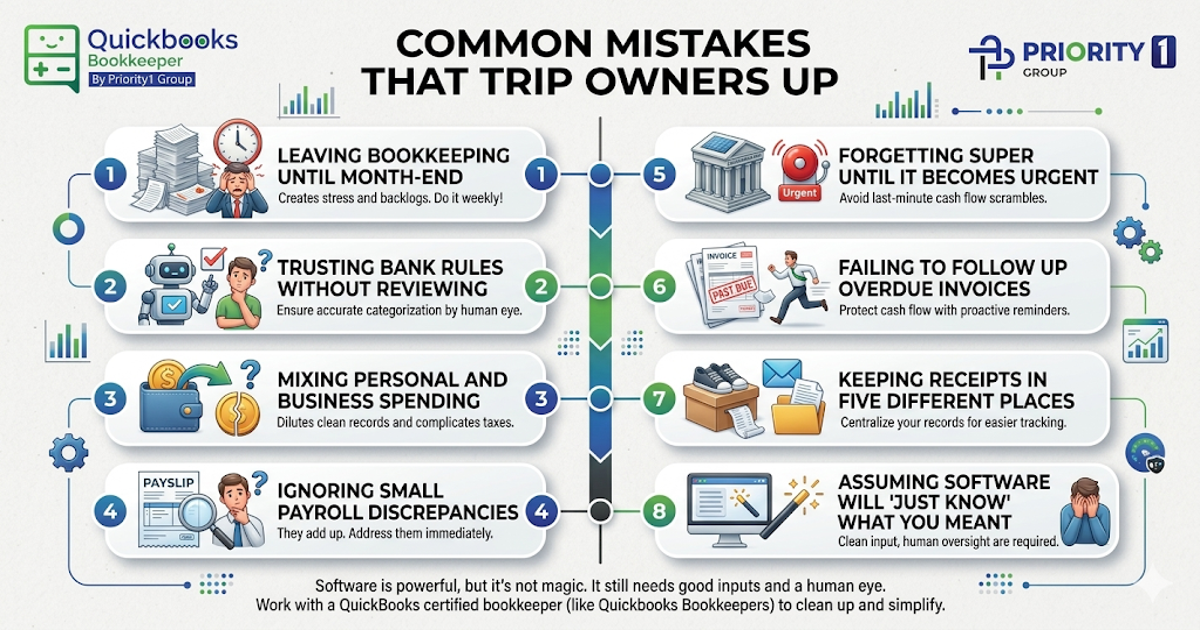
Even good operators make the same handful of mistakes.
Software is powerful, but it’s not magic. It still needs good inputs and a human eye.
That’s why many businesses eventually work with a QuickBooks certified bookkeeper who can clean up the process, tighten the rules, and make sure the system reflects reality.
If you want support specifically built around the platform, Quickbooks Bookkeepers is one example of a specialist resource focused on practical setup and ongoing use.
Here’s a simple test.
If bookkeeping keeps getting pushed because you’re too busy, too unsure, or too annoyed by it, you’ve reached the point where support probably pays for itself.
Good help should:
For some owners, that means a bit of clean-up and training. For others, it means an Outsourced Bookkeeping Service with regular support and better systems.
The best help does not make you feel stupid. It makes the business feel lighter.
QuickBooks changes the game because it helps business owners replace panic with rhythm. When your bookkeeping is handled weekly, payroll stops feeling like a trap, your numbers become more useful, and the business gets easier to steer.
You do not need to become a finance nerd. You just need a cleaner system, a tighter routine, and support that makes sense in the real world.
If you’re ready to make payroll, bookkeeping, and weekly financial routines feel simpler, Priority1 Group offers practical systems and ongoing support built for busy business owners. Visit Priority1 Group to get started.